
Landscape Lighting Design Guide: Layouts, Lumens & Style

Do you struggle to enjoy your yard after dark because it feels unsafe, unevenly lit, or uninviting? Poorly placed lights can create glare, waste energy, or leave dark patches where you need visibility most. Without a plan, fixtures often look random, and pathways or features don’t stand out the way they should.
A thoughtful approach changes this. With a clear landscape lighting design guide, you get a plan that specifies fixture placement, spacing, lumens, and color choices. It turns your outdoor spaces into usable areas after sunset, giving you safety along walkways and the right focus on trees, gardens, or entries. This blog shows you how to design outdoor lighting with layouts, lumens, and style in mind so your yard feels consistent, safe, and dependable.
What Makes A Good Landscape Lighting Design?

Every good lighting plan begins with intention. A landscape lighting design guide outlines fixture locations, brightness levels, and wiring so the final layout feels balanced. It’s about highlighting what matters, keeping pathways safe, and ensuring the system runs dependably.
At its core, a strong design provides:
- Safety by lighting walkways, steps, and entries.
- Beauty by highlighting specimen trees, stonework, and focal points.
- Efficiency by using the right fixtures and lumen levels to avoid waste.
As-built plans and 2D renderings form the foundation. These tools show you exactly where fixtures will go and give you a preview of how the space will look once the system is on. They save you from trial-and-error adjustments later.
A good design also accounts for practical details:
- Keeping wire runs short to prevent voltage drop
- Transformer sizing matched to fixture load
- Reliable connectors that withstand soil and moisture
What makes a design strong isn’t simply the choice of fixtures. It’s how everything works together. With a guide in place, you avoid dark patches, wasted energy, and inconsistent results. Instead, you get an outdoor space that feels complete and dependable.
How Many Lumens For Paths, Entries, & Trees?
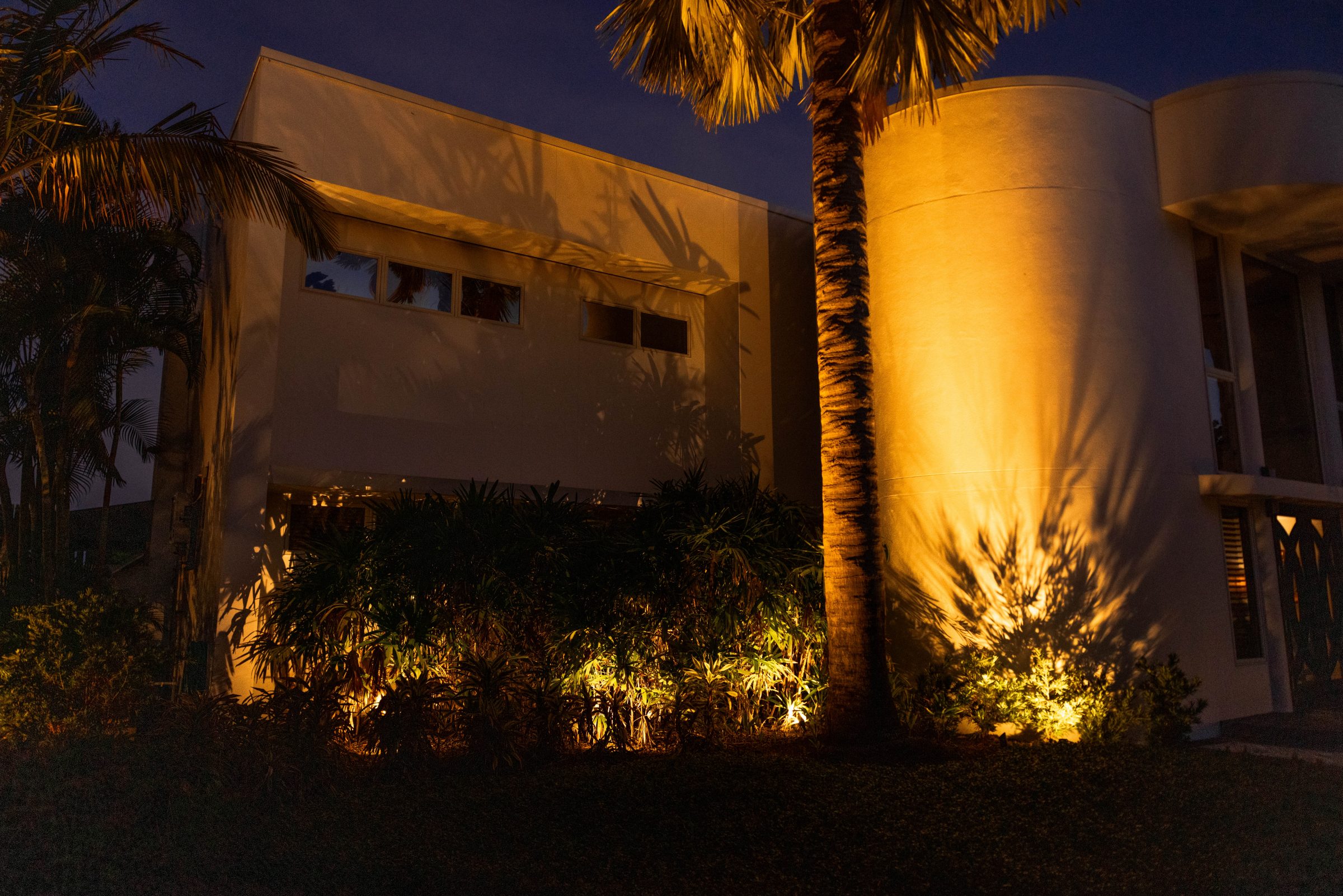
Brightness levels vary depending on the purpose of the light. A landscape lighting design guide breaks down lumens by area to help you achieve the right effect.
Paths & Walkways
Paths should feel safe but never blinding. 100–200 lumens per fixture is usually enough to see each step clearly. This range prevents glare and keeps the mood soft while ensuring safe movement through the yard.
Entry Points
Entrances need stronger illumination for visibility and security. 200–400 lumens provides enough brightness for locking doors, welcoming guests, and deterring intruders. Well-lit entries also make your home more inviting after dark.
Trees & Focal Points
Specimen trees and large features require a broader beam and higher output. 300–700 lumens brings out canopy depth and trunk detail without washing out texture. The right lumen level makes trees look dramatic yet natural.
How Can Uplighting Techniques For Specimen Trees Enhance Your Yard?
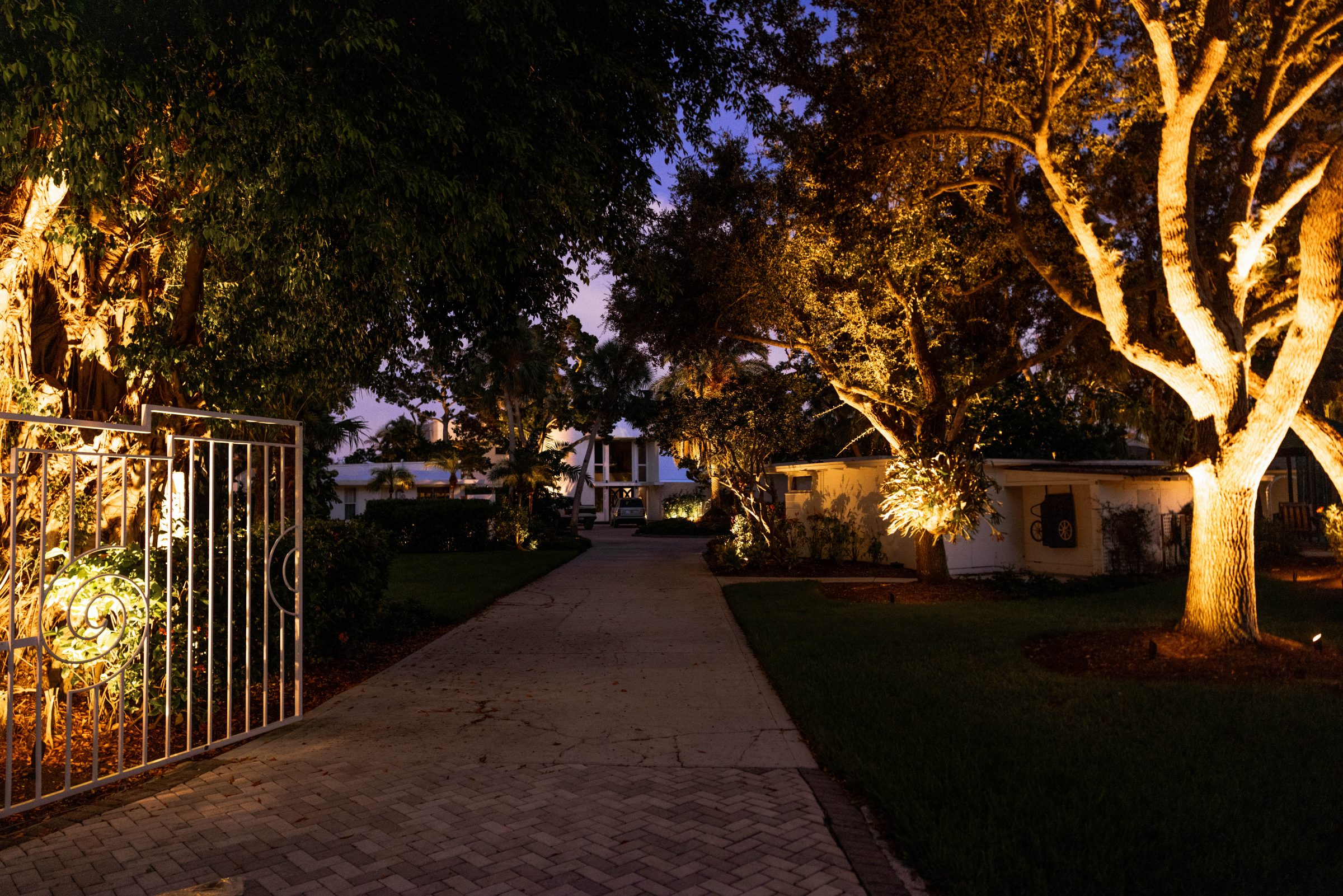
Uplighting trees is one of the most striking parts of outdoor lighting. By directing light upward, you create drama, highlight textures, and give your yard depth after sunset. Each technique produces a different effect and should be chosen with the type of tree in mind.
A single uplight is perfect for small ornamental trees. Placed at the base, the beam outlines the canopy and trunk, giving you a clean, simple effect that doesn’t overwhelm nearby spaces.
For larger trees, cross-lighting provides fuller coverage. Two fixtures placed on opposite sides eliminate harsh shadows and ensure the tree looks complete from multiple viewpoints.
Canopy lighting pushes beams into the upper branches, creating layered effects of light and shadow. This approach works best for wide-spreading trees, giving them dimension and making the canopy glow.
With grazing, the fixture sits close to the trunk. The upward beam accentuates bark patterns, revealing textures you might not notice in daylight. It works well for trees with unique surfaces such as birch, maple, or oak.
These uplighting trees techniques bring character to your property. The right mix makes trees stand out without overpowering the rest of the landscape. With guidance, you achieve balance between subtlety and impact.
How Does Pathway Light Spacing Provide Safety Without Glare?

Path lighting is about guiding footsteps safely. If lights are too close, they create glare and a runway effect. If too far apart, dark patches appear between fixtures.
The ideal spacing is usually two to three metres apart, adjusted based on fixture style and lumen level. Staggering lights on alternating sides of the path avoids harsh symmetry and keeps illumination more natural.
With the right spacing in your landscape lighting design guide, you get safe, comfortable walkways that blend with the yard rather than dominate it.
What Color Temperature Works Best For Outdoor Lighting?

Color temperature sets the mood and style of your outdoor space. Measured in Kelvins (K), it controls whether light feels warm, neutral, or cool. Choosing the right range depends on the atmosphere you want and the features you’re highlighting.
Warm White (2700K–3000K)
- Creates a cozy, welcoming glow
- Enhances wood, stone, and natural textures
- Ideal for patios, gardens, and cottage-style homes
Warm white is the most common choice for residential yards. It softens hard materials and makes gathering areas feel comfortable. If you want a relaxed atmosphere, this color range is dependable and timeless.
Neutral White (3500K–4000K)
- Balanced light that feels natural
- Works well along walkways and seating areas
- Fits both modern and traditional landscapes
Neutral white provides clarity without being too harsh. It’s a versatile option for spaces you use most often, giving pathways and patios a clean, balanced look.
Cool White (5000K+)
- Crisp, bright illumination
- Highlights clean lines, stone, or metal features
- Best used selectively to avoid a stark effect
Cool white suits modern designs where bold contrast is desired. It works well for architectural accents but should be applied carefully, as too much can make a yard feel industrial.
Adjustable fixtures give you flexibility across all ranges. With color-changing options, you can shift from warm white for relaxed evenings to cooler tones for highlighting features or hosting events. A proper landscape lighting design guide helps you balance these options for the right look year-round.
How Does A Low-Voltage Layout Keep Lighting Reliable?

Low-voltage systems are standard for residential properties, but they only perform well with proper planning. A low-voltage landscape lighting layout ensures consistent brightness and dependable operation.
Runs
Wire runs carry power from the transformer to fixtures. Shorter, balanced runs reduce voltage drop, keeping all lights at the same intensity. Long or overloaded runs often leave fixtures at the far end dimmer than those near the transformer.
Loads
Loads refer to the total wattage of connected fixtures. Balancing loads with transformer capacity prevents system strain and uneven lighting. A careful calculation avoids overloads and keeps your transformer working within its limits.
Connectors
Connectors secure wiring against moisture and soil conditions. Using durable connectors, such as ACE connectors ensures longevity, even underground. They prevent corrosion, protect against weather, and reduce system failures over time.
For a deeper look at how wiring, zoning, and water systems work together, explore our lighting and irrigation guide.
What Is The Best Care & Upkeep For Lenses, Fixtures, & Controls?
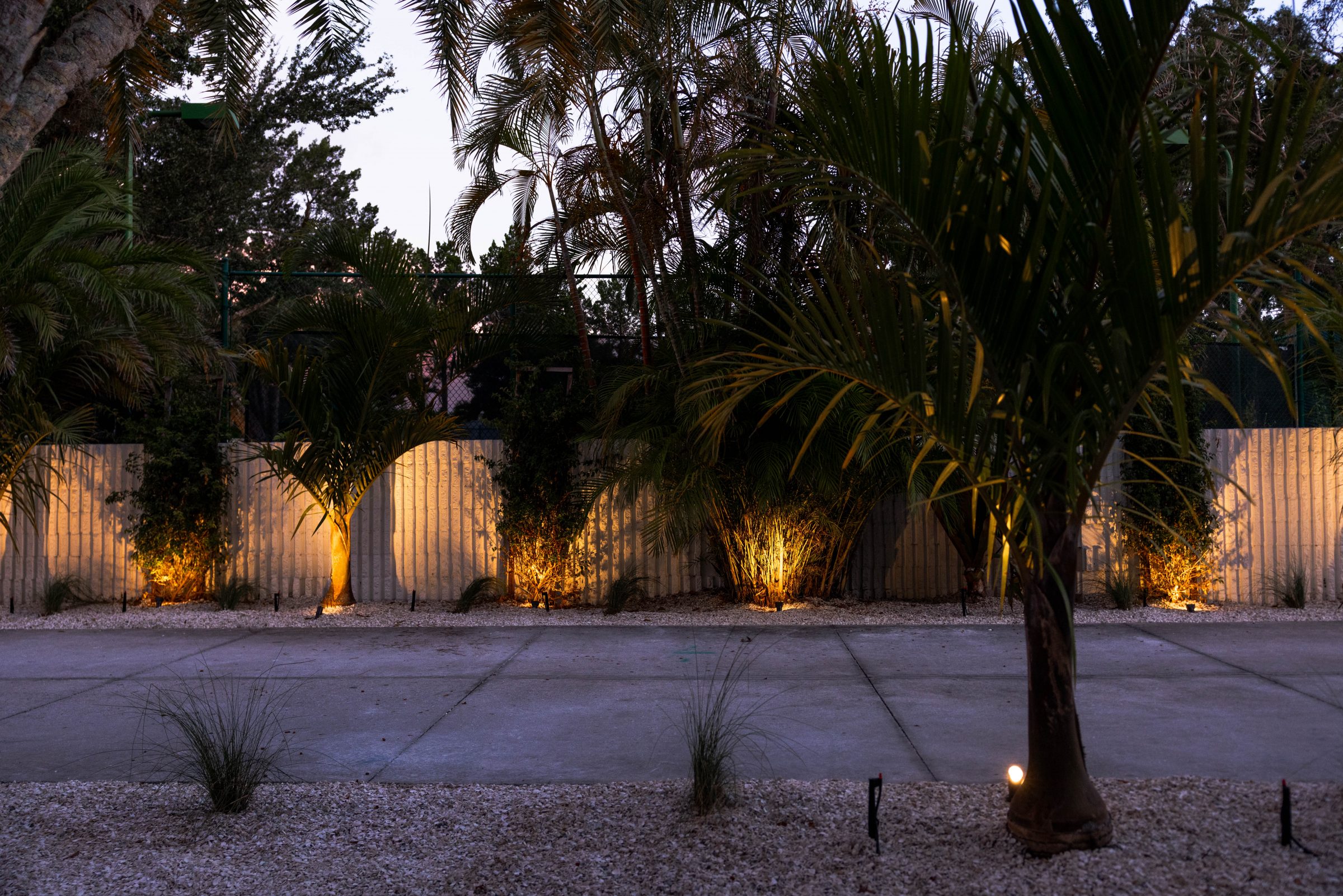
Even the best lighting design needs upkeep. Regular checks protect your investment and keep your system running as intended.
Lenses
Lenses collect dirt, dust, and mineral buildup. Cleaning them every few months with mild soap keeps beams clear and prevents dimming.
Fixtures
Fixtures can shift due to soil settlement or weather. Checking alignment ensures trees, paths, and features stay properly highlighted.
Controls
Timers, photocells, and smart controls should be tested often. Seasonal adjustments ensure lights switch on and off at the right times.
Wiring & Connectors
Connections underground should be inspected periodically. Catching corrosion or loose connectors early prevents outages and expensive repairs.
Professional Maintenance
While basic cleaning is simple, professional maintenance plans extend system life. Crews inspect all fixtures, test connections, and adjust controls so everything works seamlessly.
By maintaining lenses, fixtures, controls, and wiring, you ensure your landscape lighting design guide continues to deliver consistent results year after year.
How Arbor Landscapes Helps You Plan Lighting That Lasts?

At Arbor Landscapes, lighting projects are guided by Jake’s leadership and a commitment to doing things the right way. You get a plan that covers fixture types, lumens, spacing, and color so your system feels dependable and organized from the beginning.
Every project includes a dedicated account manager to keep communication clear and timelines on track. Our crews use reliable connectors, efficient layouts, and quality fixtures to deliver lighting that holds up against time and weather.
We believe in follow-through, honest service, and building community trust. If you’re ready to improve your property with a reliable landscape lighting design guide, Arbor Landscapes is here to help. Request a consultation today and start planning a lighting design built to last.
Summary
This blog explained how a landscape lighting design guide gives you structure for safe, efficient, and visually appealing outdoor spaces. You learned what makes a good lighting design, how to calculate lumens for landscape lighting, and which uplighting trees techniques bring character to your yard. We covered how pathway light spacing improves safety, how color temperature for outdoor lighting affects atmosphere, and why a low voltage landscape lighting layout keeps systems reliable. You also saw how care and upkeep for lenses, fixtures, and controls extend system life.
With Arbor Landscapes, you get communication, timelines you can rely on, and craftsmanship that reflects honesty and dependability. A lighting plan doesn’t just brighten your yard; it gives you confidence that every fixture and wire has a purpose.
Tags: